
Hellsinki
Hellsinki was a den of crime. Aleksi Mäkelä revives the legends of Punavuori.
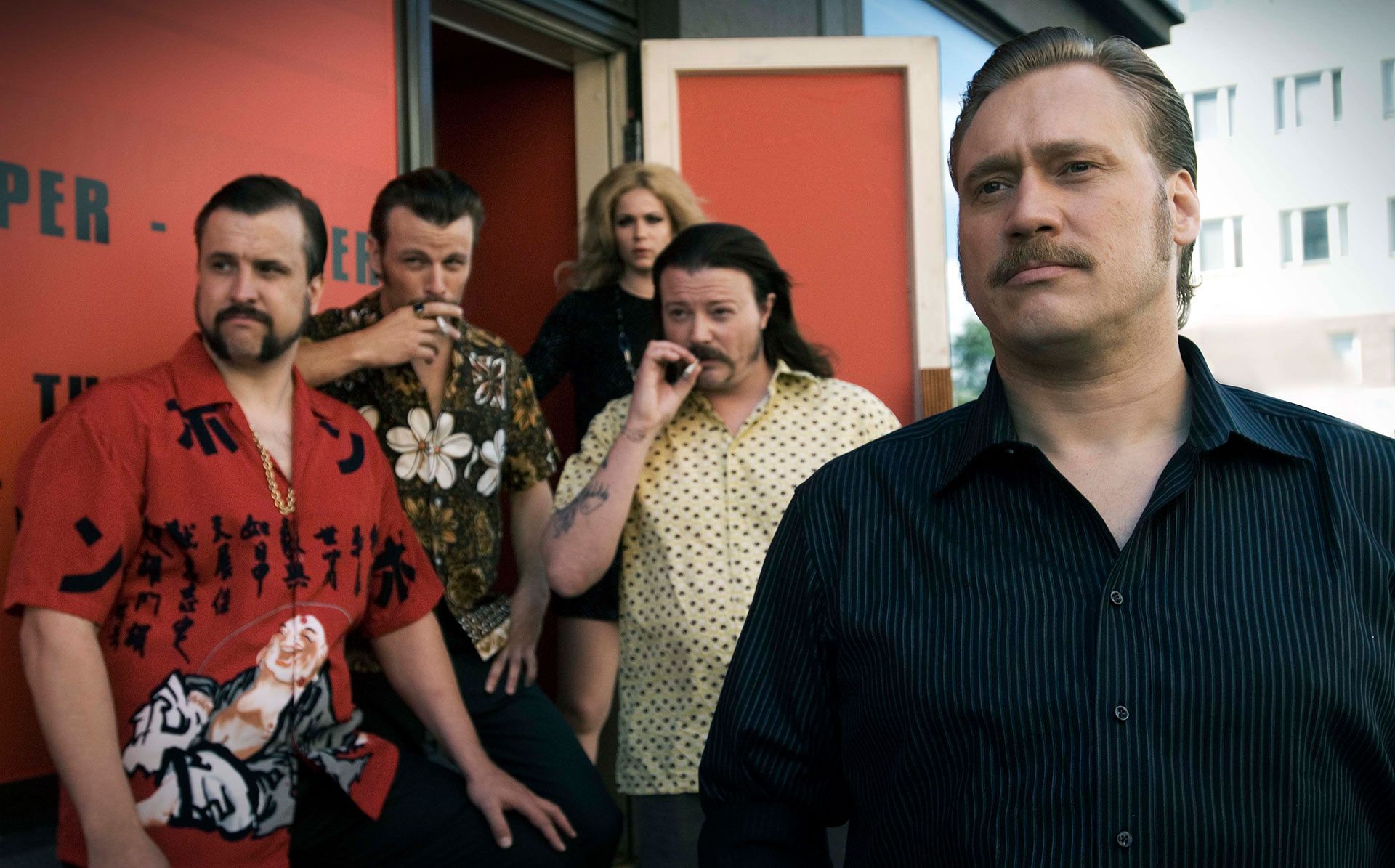
The original idea for the film is based on Harri Nykänen and Tom Sjöberg's interview novel RÖÖPERI – Rikoksen vuodet 1955-2005, in which both cops and robbers reminisce about the past of a notorious part of Helsinki. One of the authors, Tom Sjöberg, was a member of the Punavuori gang and is a role model for Tomppa, the main character in the movie. It should be pointed out, however, that the similarity and correspondence of both Tomppa and the other characters in the film to the real people interviewed for the novel are heavily dramatized, distanced and coincidentalized. Even if the event in the film has a real background, the person experiencing it may be a completely different person than the one in the film. The story of Hellsinki takes place between 1966 and 1979, with the exception of a short flashback period in the 1950s.
"I'm not saying that crime was the only option, but it was still a damn attractive choice."
Hellsinki is not only the story of the people who grew up in the Punavuori district and their lives, the men who chose crime as their profession, but also the story of the district itself, its people and its atmosphere – a time and a world that no longer exist as such.
"We weren't even considered as criminals, we were respected businessmen."
Although the film's portrayal of the reality of the Punavuori district and the period in which it is set is rather harsh and brutal, the characters of Tomppa, Krisu, Gypsy Kari, Uki and others who roam its streets are constantly present, at the same time, with sensitivity, warmth and humour: qualities that force the viewer to like them, to cry and laugh with them – and for them.
"I don't know if I'm going to hell or heaven, there are as many friends in both."
Synopsis
To happiness, to the prison or to the grave?
In the beginning, there was the booze, which you sold to make money and solve all your problems. What happened then?
Hellsinki tells the story not only of its main characters Tomppa and Krisu, but also of Gypsy Kari, Arska, Korppu, Uki and many more of the miscellaneous band of villains, about their tortuous and inexorable journey from poverty, through crime, to respectable citizenship, to prison – or to an early grave. The dark side of the law is explored through the eyes of the district's own police officer, Koistinen.
What all the guys who have gone off the rails have in common is that they start out in the booze business and are convinced that money is the solution to all their problems. Money is the way from a miserable life to happiness, to their own modest dreams at the beginning. You can quit the criminal business as soon as you have enough money. When the money starts to accumulate from the black liquor, hunger grows and dreams along with it.
"Drugs are what's kicking in right now."
When the others move to the drug trade and Stockholm, Tomppa marries Monika and, under pressure from her, makes his first attempt to become an almost honest entrepreneur – he sets up a sex shop called Sex Emperor. Meanwhile, the others, led by Krisu, create a criminal career in Sweden. In their greed, they drift deeper and deeper into a drug world with its own set of laws. A criminal career demands ever harder grips, more definitive solutions. To maintain their position, they must eventually be prepared to kill – or die. The only one to return from Sweden is Krisu, now a penniless junkie.
"The situation is that everything that came from there has gone. And a bit more, to be honest".
During Tomppa's years as an entrepreneur and others' in Sweden, power, laws and generation have changed in Punavuori: the neighbourhood is now ruled by Korppu and his young gangsters. When Tomppa's wife starts expecting a child, Tomppa is forced to borrow money from Korppu, who runs a black bank. Krisu, who has a drug problem, also finds himself in the same situation. Both men are in worse trouble than ever before.
"I think this time it's you who smells the shit. Look, I have a feeling that rates of interest just went up like a motherfucker. Especially those business rates."
Will either Tomppa or Krisu finally succeed in their attempt to become honest and self-sufficient citizens? And will they find what they both set out to find in the first place – happiness? What price will they have to pay on the way? Will the end result be worth the choices they made?
"I want to get rid of drugs and the drug business. I'm not looking for the moon. I have relatives in ordinary jobs. They've worked for twenty or thirty years, and they have houses, cars, games and gadgets. I'm forty years old and I've got fucking nothing! I've fucked up everything in my life so far."
ROLES INCLUDE:
Tomppa – Samuli Edelmann
Krisu – Peter Franzén
Monika – Pihla Viitala
Gypsy Kari – Kari Hietalahti
Koistinen – Juha Veijonen
Korppu – Jasper Pääkkönen
Uki – Pekka Valkeejärvi
Pera – Hiski Grönstrand
Sale – Tommi Rantamäki
Arska – Kristo Salminen
Lindström – Kalle Holmberg
Tomppa's mother – Leena Uotila
Kari's mother Tyyne – Pirkko Mannola
PREMIERE IN FINLAND
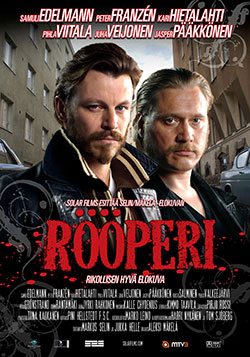
9.1.2009
DIRECTOR
Aleksi Mäkelä
PRODUCERS
Markus Selin and Jukka Helle
PRODUCTION MANAGER
Sirkka Rautiainen
SCRIPT
Marko Leino
ORIGINAL NOVEL
Harri Nykänen and Tom Sjöberg
CINEMATOGRAPHY
Pini Hellstedt F.S.C.
SET DESIGN
Pirjo Rossi
COSTUME DESIGN
Tiina Kaukanen
MAKE-UP DESIGN
Riikka Virtanen
SOUND
Jyrki Rahkonen
MUSIC
Kalle Chydenius
EDITOR
Kimmo Taavila
ASSISTANT DIRECTOR
Jouni Mutanen
TV RIGHTS
MTV3
SHOOTING PERIOD
March, June and July 2008